
Welcome to The River Path
Tending to the deeper currents of our lives.

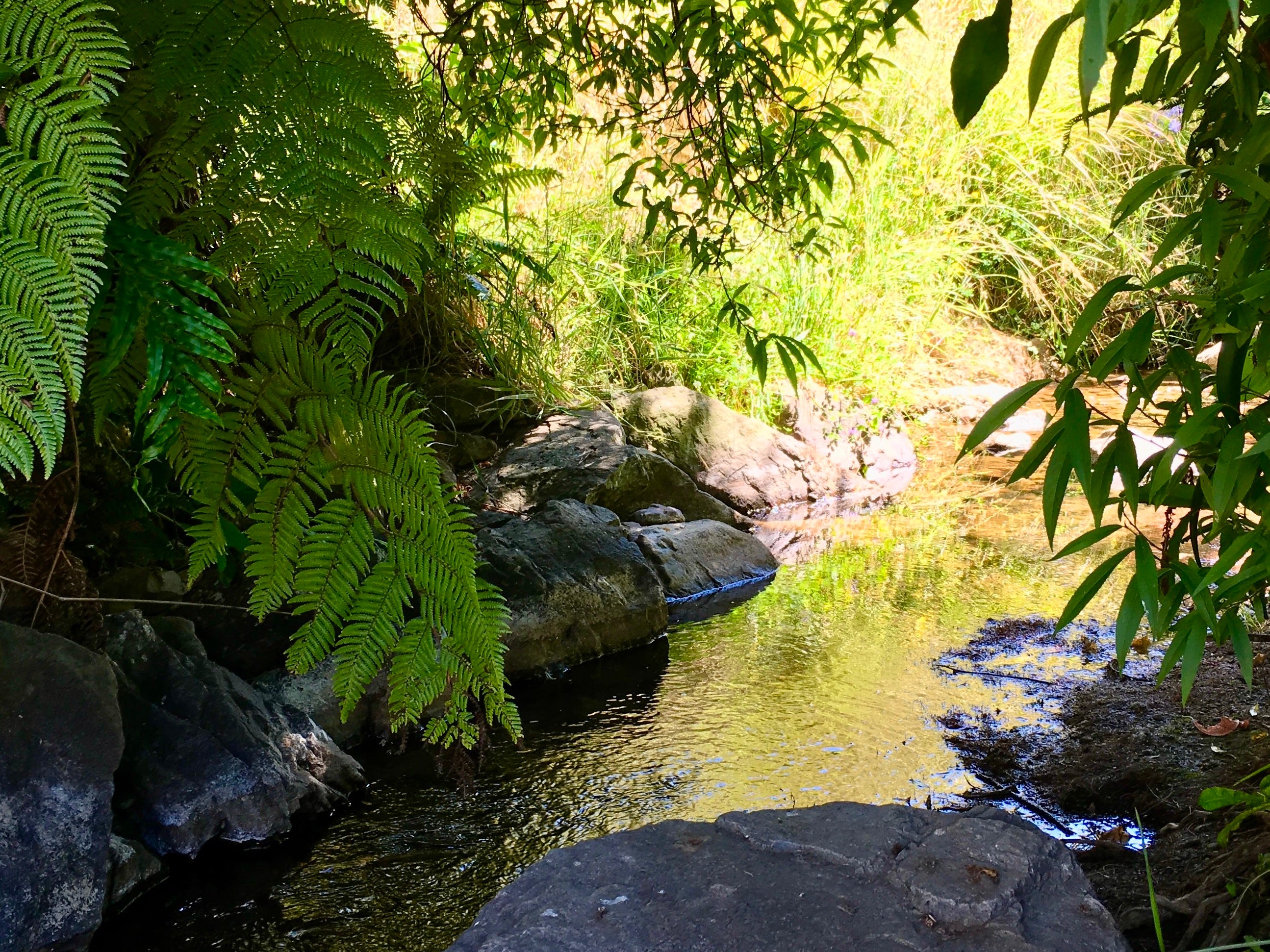
Starting at the spring
A long time important life book for me has been Women Who Run with the Wolves by Clarissa Pinkola Estes (Rider: 2008). I first read it when I was 23, then left that copy in New Zealand soon after because it was too heavy to travel with. I wore my next copy out; my current edition is due for a replacement. 25 years ago, newly arrived in London and feeling very lost, the stories in it were a life-line. I don’t pick it up as often as I used to, but it’s beside me on the table as I write, in part to give thanks to what became a foundational concept for me, namely Río Abajo Río, The-River-Beneath-the-River, the idea of which gave life to The River Path.
This watery realm is underworld, a place of deep time, deep thinking, deep being. I experience it as being beneath what could be called the topside world, which can be very noisy at times. This topside world is equally important, it’s just different, and it’s very good at getting our attention.
The-River-Beneath-the-River moves at a different pace. Sometimes we might spend only moments there, such as when we notice the last of the days sun falling across the kitchen bench, or we kiss someone we love goodbye at the airport. Sometimes we spend much longer, coming to it in times of change and crisis as well as joy, along with the liminal times of birth and death. Through it all this river that carries us. It rises up in any creative act (which is the making of our lives). What I know about this place is that it needs time and attention, and when it flows through us it brings us home to ourselves.
Tending the deeper currents of our lives
What are some of these deeper currents?
Creativity and deep joy in the everyday
Flowing through the centre of The River Path is the certainty that we are all creative, that we are constantly engaged in acts of creation. Don’t get snagged here thinking you’re not creative, which can so easily get caught up with what it means to be artistic. Art making is important, however it’s only one facet of creating. For the purposes of this ongoing project, creating is about making or inventing or imagining something that didn’t exist before. It could be a meal, a baby, a spreadsheet, rearranging your pot plants, a new car design, a video, a conversation with a friend that drops down a layer or two, an elegant solution to a problem, a new way of tracking your runs on Strava, a message to a family member you spend time thinking about, a coffee, a wooden bird table….the list is endless.
A long time ago I asked friends and family to each write a list of their 100 Loves. I still treasure those lists, and will do a post about them. Utterly personal and unique, they are inventories of what lights each of us up, celebrating the every day loves that make up our lives, an act of attention that enriches both the person writing the list, and anyone who reads it.
Grief and loss, death and dying
Grief is one of the reoccurring themes of the River Path. Why? One answer is that I’ve known a lot of grief in my life, from close friends and family dying in their early thirties, to miscarriage, to being at the deathbeds of both my parents. I have returned to it often as a theme in my writing and poetry, partly from necessity, because writing is how I make sense of the world, of my emotions, and partly because I got very curious about grief’s many changing faces, and wanted to understand it better.
I was lucky to be tutored in grief and dying by a father who really understood both, knew what they needed, how they might be tended. This poem speaks about that. I also grew up shaped by a Māori understanding of death, and feel very lucky to have done so.
Over the years I’ve come to appreciate is that grief is absolutely part of being alive, of living fully and well. It is a companion for all of us, we just aren’t necessarily accustomed to thinking of it this way, especially if we are not held by a wider cultural conversation around it. Time on The River Path offers some other ways of how we might understand and interact with grief, through stories, poems and attention. How we might attend to the little deaths that are in all our lives along the way.
Illness
I have Lupus (SLE), an autoimmune condition that can affect any system in the body. Lupus is the Latin for wolf. The name came from a severe facial rash, rarely seen now, that was once thought to resemble a wolf’s bite. For me Lupus primarily shows up in swollen joints, muscle soreness and a deep and profound fatigue. These symptoms come and go - there are times when I feel great, and times when I’m in a flare-up, and everything gets more difficult.
I’ve had over a decade of getting to know what I call the She-wolf, and while her teachings can at times be tough, they also, paradoxically, contain life-saving and life-enhancing wisdom. This is not some ‘glass half full, only look at the bright side’ fake positivity sticking plaster, but something much, much deeper, much harder won.
It is the She-wolf who taught me - and continues to teach me - how to rest, how to live at a rhythm and pace that is more sustainable, more generative. It’s she who will often bring me back to myself. Not everyone has this kind of condition, but learning how to navigate illness or pain, whether acute or chronic, along with the changes that come as we get older and are able to do less, takes time and patience, and is one of the places where we most need to tend to ourselves, on every level. The word learning is key here, because often we are encountering things we might not have had to deal with before.
What does ‘tending to’ mean?
Tending means to care for or look after. The River Path is about giving attention to these deeper currents, noticing them, seeing and listening to what might be needed. To name what we find and in doing so give our findings value. Honouring what has been and what is to come.
Including joy, noting what lights us up, what makes us breathe out with a deep sigh of contentment. Cultivating this in our lives.
To listen and attend to the places that are sore, numb or aching.
Our creativity is definitely something that needs tending, sometimes requiring fierceness, because to care for something is not all softness and pillows. To care for something is also to protect it, to value it, to make it important. We tend to our boundaries and edges as much as the flowerbeds.
Tending is a form of work. We keep the river clear, cut back the path when it gets overgrown, check the brambles haven’t taken over. We watch out for all that lives along the river.
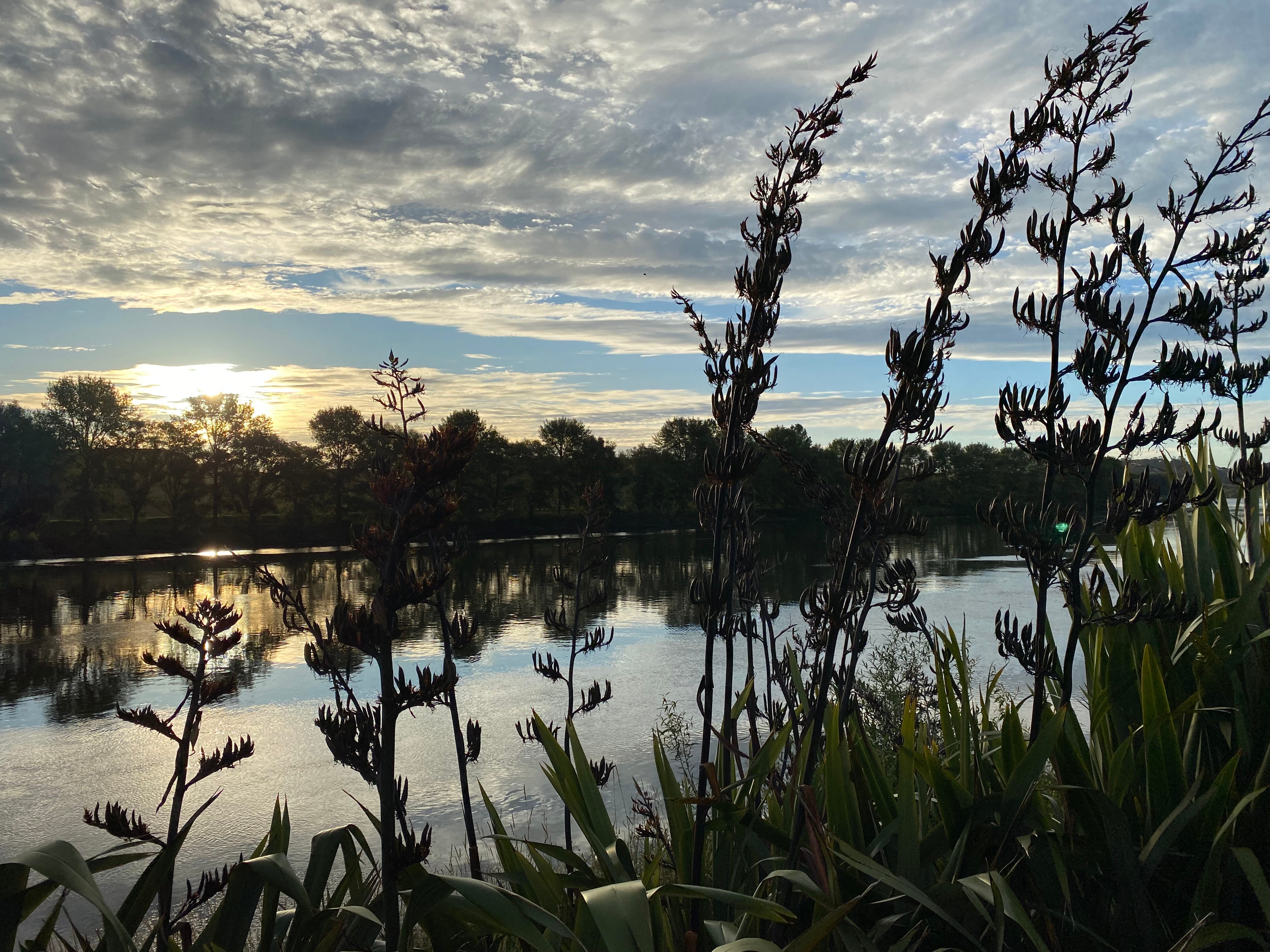
What might you find on The River Path? Rest and reflection; contemplation and connection.
It’s definitely harder to tend to the deeper currents when we are rushing, and the world is super speedy right now. Slowing down can, at times, feel nearly impossible. In a world that is constantly on, with an unceasing volume of information, news and contact coming our way, many of us can have a sense of overwhelm. This is in part because our nervous systems, hearts and spirits weren’t built to process this much at once.
But a walk beside a river - real or metaphorical - can help. Water. Rocks. Trees. Sit on a rock or lean against a tree or dangle your feet in the water and you enter a different relationship with time. We loosen ourselves from the constant immediacy our culture has us plugged into, and let ourselves sink down into story time, which isn’t quite the same as clock time. Spiral forward, spiral back.
The River Path is a place to rest, to take stock, to reflect. To pause in the doing.
Part of The River Path is knowing that we are connected - to ourselves, to others, to the world around us, our more-than-human kin. We are connected to stories - the stories of our ancestors, of the lands we are from and the places we live now, to the books we read and to that which is passed along in conversations, one person to the next. Maybe it’s in your local shop, maybe it’s your auntie telling you a tale from before you were born, or a mentor at work sharing something they’ve learnt along the way. There is healing in the telling, and healing in the listening.
We each have our version of the river, shaped by our own personal topography. Your rapids won’t look the same as mine; but there are commonalities, knowledge we can pass on to each other about how rapids might be navigated.
The River Path offers a map. This map is not definitive, we each create our own, and over a lifetime. But at times, when you’re feeling stuck or unsure, it can help to check out the maps of others, to see if there is anything that might be useful or sustaining.
Why The River Path?
Because I nearly always feel better having walked beside a river. Because rivers have endless things to teach and show us. Because the word has such a beautiful sound. Because rivers connect the source or spring to the sea or lake, at once tiny and oceanic. Rivers know a lot about transition and change.
One of the hopes of The River Path is that it is a place of solace and balm, a place that makes you put down your phone or your computer, however you are reading this, and look out the window and go, ah yes, I’m not alone in this, for these are the deeper currents we as humans have always tended. The details change, but the themes remain the same - how do we live and how do we die, and everything in between.
Come walk a while. There will be unexpected bends in the river, places that are exciting, others that are boring. The path keeps changing and unfolding for me too. Looking forward to seeing you on the bank.
Beautiful post - I love the discussion of Women who run with the Wolves and the powerful ideas about the deep river beneath the river leading to this River Path. With love from your river-neighbour xx
so precious you are, in your lyrical writing, certainly not to be confused with the sanitised ideas about lyricism being 'beautiful and serene' - all those tyrannies of 'presence' and 'being' - you, Rachel, know that lyrical is sometimes rough as fuck, yet still that river holds, sustains, guides, teaches, and most of all if we can allow, it stays with us. It has/is always there in the subterranean in each of us, but often unoccupied, because we have to have the will, or the hunger, enough that we can turn down the volume of so much noise, and hear and feel the flow and fluency of simple - the home ground of freedom - the place where peace will sometimes throw us hard at hard walls, yet still be peace.
Thank you for your work, for being so you.